


What is an Applicant Tracking System?
Learn the ins and outs of the most common and effective recruiting software for automating processes.

SHARE THIS ARTICLE


A hiring manager is the person who owns the decision to fill an open role, usually because the new employee will report directly to them. They are not part of the human resources (HR) team. They are a manager from any department who steps into the hiring process to find the right person for a role on their team, then steps back out once the seat is filled.
Paired with a structured interview process, a well-supported hiring manager is one of the strongest predictors of a good hire. This guide explains what hiring managers do, how they differ from recruiters, and how to train them so this often underused role works in your favor.
A hiring manager is a manager who works with recruiters and HR to select and hire new talent for a role on their team. The amount of preparation they get before they start varies widely by organization and role, which is a common reason hiring outcomes are inconsistent. Many receive little to no interview training at all.
The role has two defining traits.
Almost any manager can become a hiring manager at some point. It is not a standalone job but an added responsibility: working with HR or recruiters to fill a role, usually for someone who will become the manager's direct report. Once the role is filled, the responsibility ends.
Unlike core HR roles, there is rarely a formal process for teaching someone how to be a hiring manager. That gap creates wide variation in how managers approach the work from one hire to the next. Training should be mandatory, but it does not have to be complicated. The most effective approach is a simple, consistent structured interview workflow with validity built in, so the manager follows a proven process rather than improvising.
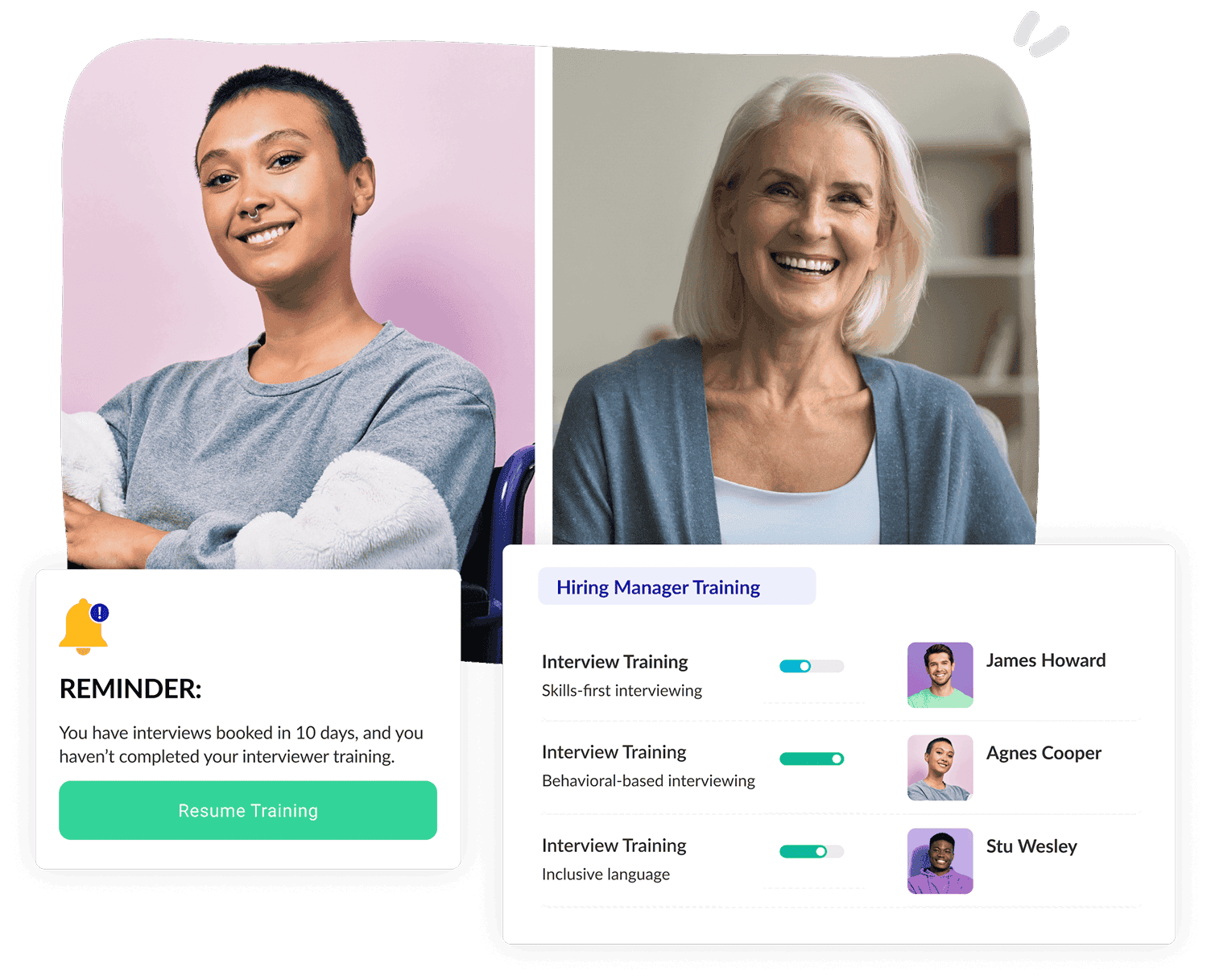
Hiring managers usually make the final call on who gets hired. They are the closest leader to the open role, so they understand the skills and competencies a candidate needs to succeed in the position.
How much of this falls to the hiring manager depends on the organization, department, and role. HR professionals know these steps well. A first-time hiring manager often does not, so clear interview guidance for managers matters at every step.
Part of the role is creating a positive candidate experience. These basics are simple, but they shape how candidates judge the organization.
Do:
Don't:
Start the interview on time.
Mispronounce the candidate's name.
Stay fully present throughout the interview.
Show up unprepared.
Give a realistic job preview.
Use the complexity of the role to intimidate candidates.
Keep communication open at every stage.
Go silent on candidates you decide not to hire.
A hiring manager makes the final hiring decision, while a recruiter builds the pool of candidates to choose from. Both are involved in hiring, but they own different parts of it.
Recruiters source and screen candidates and manage the process end to end. Hiring managers select from that pool and make the final choice, on top of their regular job. Because the role is temporary and added to a full workload, many managers treat it as "not my real job," which can show up as low engagement.
Recruiter
Hiring manager
Main responsibility
Build and manage the talent pool
Choose the final hire
Role type
Permanent, full-time
Temporary, added to existing duties
Department
HR or talent acquisition
Any department with an open role
Decision power
Screens and recommends
Makes the final decision
When a manager feels the role is a burden, the hire suffers. You may see them settle for any reasonable candidate, hire whoever feels safest or fastest, or assume they already know the best person without proper vetting. The fix is to keep managers engaged: give them quality candidates, involve them throughout, and make the process easy to follow.
What does hiring manager satisfaction look like?
Hiring manager satisfaction measures how effective a manager found the recruiting process they took part in. When the manager is satisfied with the hire, the new employee is more likely to succeed in the role.
The most effective way to support hiring managers is to give them a structured process to follow, not a crash course in the art of interviewing. A repeatable system makes the role feel lighter and produces more consistent, more defensible results. Four practices make the biggest difference.

A structured interview gives every candidate the same questions and the same rating criteria, which produces more consistent results and makes the manager's job easier. It removes guesswork and mitigates the impact of bias on the decision. Build the process once, then train managers to follow it and ask the interview questions you have prepared. That is far quicker than teaching interviewing from scratch.
What is an interview guide?
An interview guide gives a manager every detail of the process in one place: the questions to ask and the rating criteria for each one. It turns a structured process into something a first-time interviewer can follow with confidence.
A panel interview brings at least one other team member into the room alongside the hiring manager. When the panel is structured, it adds multiple perspectives, lowers rater variance, and supports legal defensibility because more people share the decision. It is also a low-risk way for a new hiring manager to learn interview dynamics before they run their own.
An interview compliance policy sets one clear standard for how every interviewer, including hiring managers, should conduct interviews. Use VidCruiter's interview compliance framework as the starting point, then adapt it to your organization. Some organizations assign an interview compliance officer as the single point of accountability for the policy and adherence to it.
Interview intelligence applies artificial intelligence (AI) to the interview process itself, not to the candidate. It gives interviewers feedback on signals like interruption rate, talk-time distribution, and how closely they followed the structured process. Managers can use that feedback to improve, and HR can build individualized coaching plans from it. Recording live interviews also keeps a record for compliance and legal defensibility.
Yes, but only with clear guardrails and a human making the final decision. VidCruiter's AI interview scoring evaluates what a candidate said against a client-approved rubric, never how they said it, and every AI score is subject to mandatory human override. Used this way, AI supports a hiring manager's judgment instead of replacing it.
The caution that remains is about transparency. A 2022 SHRM study of 1,688 members found nearly one in four organizations use automation or AI in HR, yet only two in five buyers said their vendor was very transparent about how the tools guard against discrimination. The lesson is not to avoid AI. It is to choose AI you can explain and audit, and to keep a person accountable for the decision.
Choose AI you can explain
Before adopting any AI scoring tool, confirm what it evaluates, how it is validated, and where a human stays in control. VidCruiter's AI framework guide walks through how to make those decisions.
Hiring is not getting easier, and labor markets are likely to stay tight. Whatever the role, a hiring manager will be involved, because they put candidates face-to-face with the person they would report to. Give that manager a structured process, interview training, and AI that assists rather than decides, and you make that interaction more effective. The result is a stronger process, a better candidate experience, and a far better chance of hearing "yes" from the people you want to hire.

No. This is a common misconception. A hiring manager can be any manager in any department who has a role to fill. HR supports the process, but the hiring manager owns the decision.
Usually, yes. In a well-run process, the hiring manager has oversight of the open role, so candidates can ask them about the day-to-day work. That said, any employee tasked with filling a role can act as a hiring manager. When that is the case, tell candidates early so they do not make wrong assumptions.
Behavioral interview training teaches managers to ask about candidates' real past actions to predict future performance. Instead of hypotheticals, managers ask candidates to describe specific situations they handled at work. The STAR method (Situation, Task, Action, Result) gives managers a consistent frame for evaluating these answers against the role's core competencies.
Interview training helps an organization make better hiring decisions, improve candidate experience, support interview compliance, and mitigate the impact of bias. Hiring managers can be a real advantage, but only when they have the knowledge and materials to do the role well.
Yes, with guardrails. VidCruiter's AI interview scoring evaluates what a candidate said against a client-approved rubric, never how they said it, and a human always has final say. Choose AI you can explain and audit, and keep a person accountable for the decision.
E-BOOK
The Modern Guide to Structured Interviewing
Get your free copy of VidCruiter’s comprehensive white paper about structured interviewing. This practical guide:
 Shows you how you can use technology to optimize your hiringTeaches you how to develop and conduct a structured interview process
By providing email address, you agree to receive updates from VidCruiter.
Read our Privacy Policy
Modernize your hiring process with expert insights and advice.