

Interview Scheduling
Coordinate interview times for panelists and candidates without the back-and-forth.

SHARE THIS ARTICLE


A panel interview is a hiring format where two or more interviewers question a single candidate in the same session. Done well, it shortens the hiring timeline, gathers several knowledgeable viewpoints in one sitting, and mitigates the impact of individual bias on the final decision.
This guide explains what a panel interview is, how to conduct a panel interview step by step, which questions and scoring methods work best, and how to run a panel remotely. The format pairs naturally with structured interviews and a well-run interview scheduling process.
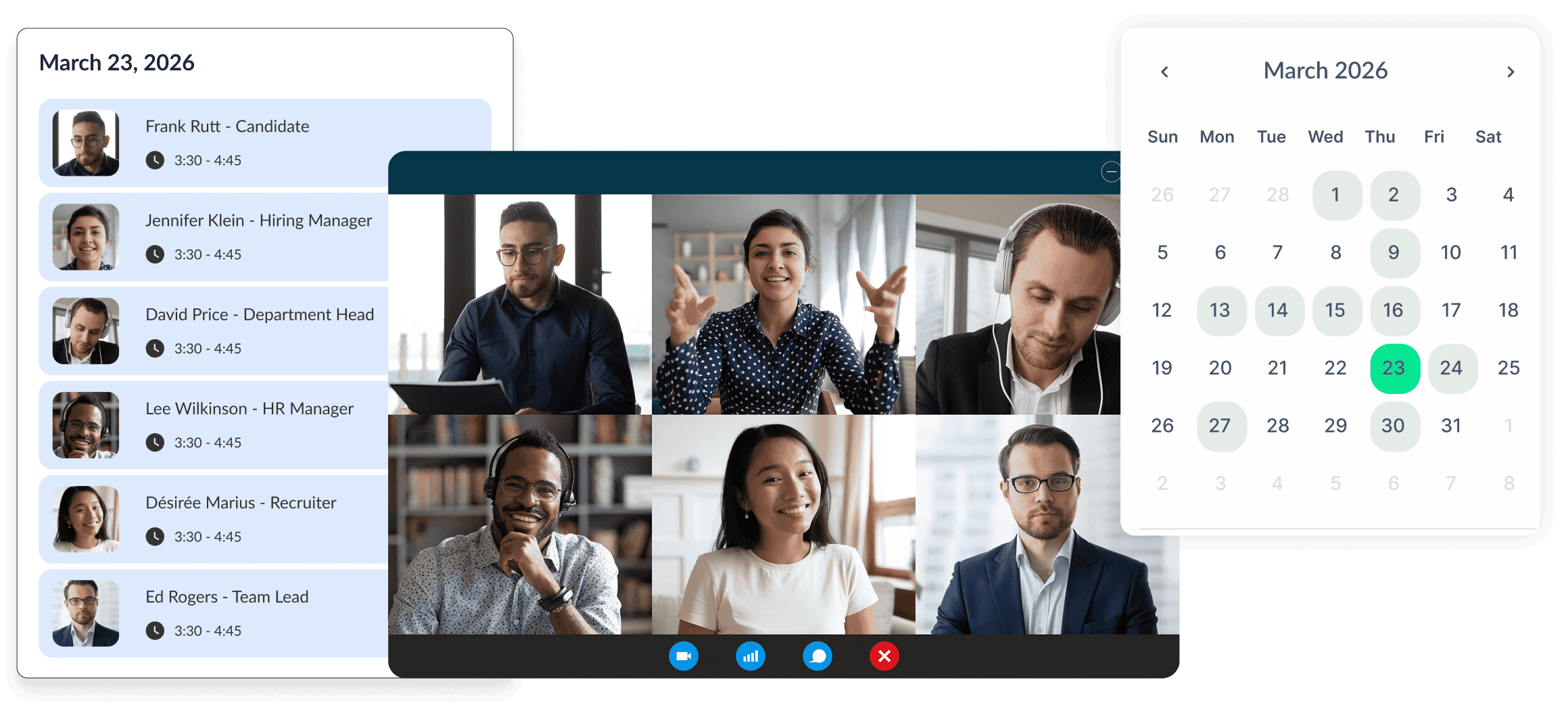
A panel interview is an interview format in which several interviewers, called panelists, question one candidate together in a single session. Each panelist usually asks questions tied to their own role, so the candidate is assessed from several angles at once.
A panel typically includes anyone whose judgment matters to the hire: the prospective manager, future peers, a human resources (HR) representative, and a role specialist who can probe technical depth. Most panels run between two and five members.
Panel interviews are not the same as group interviews. A panel has several interviewers and one candidate, while a group interview has one or more interviewers assessing several candidates at the same time. Group interviews suit high-volume hiring and show how people interact, whereas panels give one applicant several independent evaluations.
A structured panel interview combines two evidence-based tools: the interview panel and structured interview methodology. In a structured format, every candidate answers the same questions in the same order, scored against a fixed rubric, which is what gives the approach its accuracy.

Panel interviews lead to stronger, fairer hiring decisions, but they ask more of both interviewers and candidates. The benefits outweigh the drawbacks when the panel is structured and prepared.
Conducting a panel interview means standardizing every step so each candidate has the same experience. Build the process around a structured interview guide and follow this sequence.
The strongest panels are small and varied, with each member assigned a defined role. Aim for a mix across seniority, function, and background so the candidate is evaluated from several perspectives, and so no single viewpoint dominates. Many organizations build these criteria directly into the interview guide when they design their interview panels.
Panel role
Responsibility
Lead interviewer
Greets the candidate, explains the format, and keeps time. Usually the hiring manager.
Facilitator
Keeps the conversation moving and stops any one panelist from dominating.
Compliance monitor
Confirms each candidate is treated equally and the panel follows legal guidelines.
Records keeper
Collects and stores interview records, such as resumes, schedules, and agendas.
Role specialist
Brings technical depth and probes the candidate's knowledge of the job.
The best panel interview questions are job-related and asked the same way to every candidate. Three question types cover most panels: competency-based, behavioral, and situational. Assigning each type to the panelist best suited to ask it keeps the conversation focused.
A logical order helps candidates settle in and gives the panel cleaner data. Move through broad opening questions, then role and skills questions, then technical detail, then behavioral scenarios, and finish by letting the candidate ask their own questions. For more examples by category, see VidCruiter's library of interview questions.
Score panel interviews with a shared rating scale that every panelist completes independently, right after each answer. Independent scoring before any discussion is what keeps a panel from sliding into groupthink. Four methods work well, depending on the role.
Predictive validity is highest when panelists record scores immediately after each question rather than at the end. Capturing ratings in a digital interview platform keeps each scorecard independent and securely preserves evidence of a fair process.
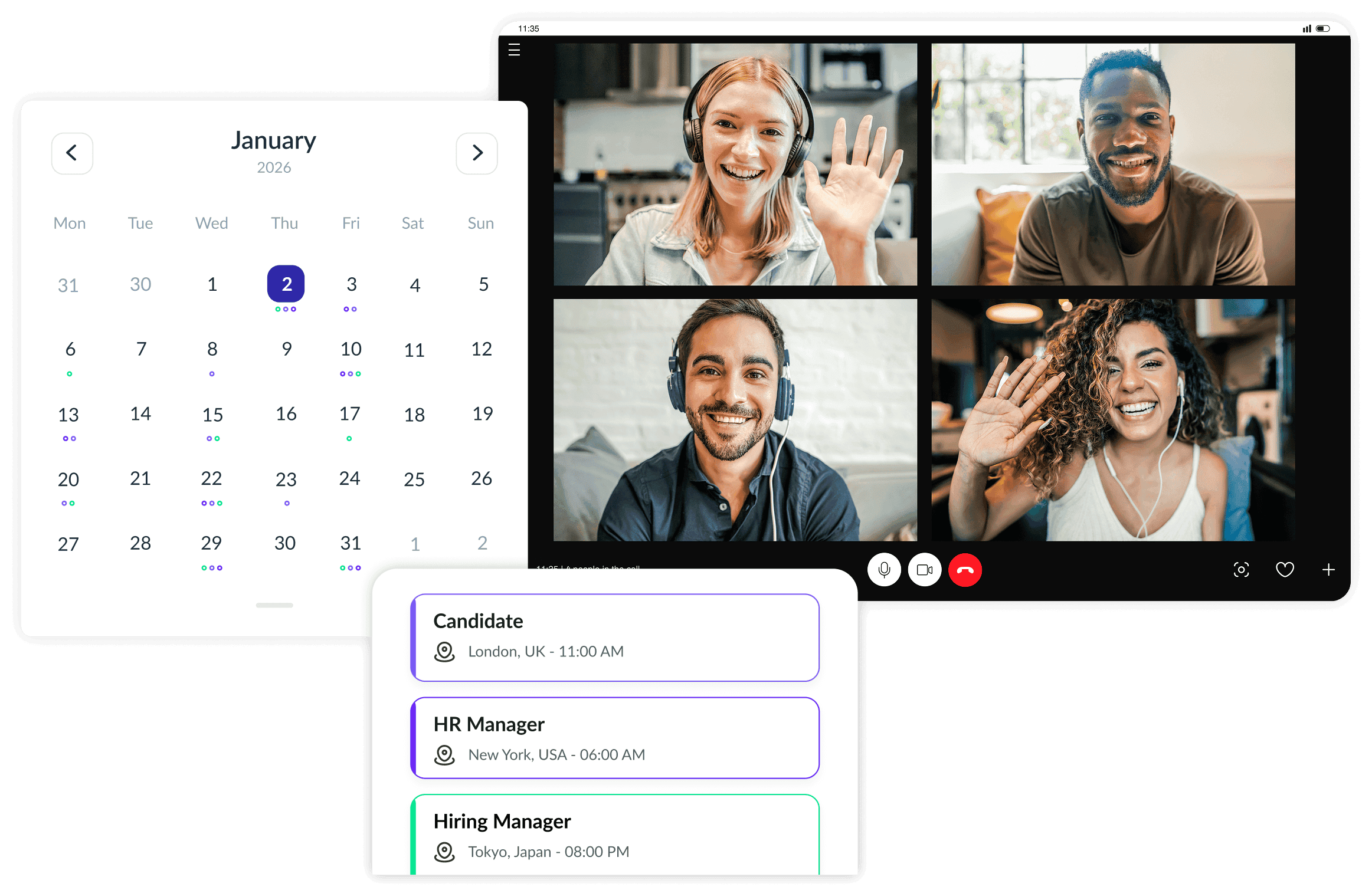
A virtual panel interview follows the same structure as an in-person one, with extra attention to technology and consistency. The goal is to keep conditions identical for every candidate, so the evaluation stays fair.
Ask panelists to use a consistent background and to test their camera, microphone, and connection beforehand. Close side channels like Slack or Microsoft Teams during the interview so private chatter does not distract the panel or the candidate. Monitor talk time, and prepare a contingency for a dropped connection or an absent panelist.
General video conferencing tools were not built for hiring. A purpose-built video interview software adds embedded interview guides, structured scoring, and secure records, while interview scheduling software keeps every panelist's calendar aligned.
A few small habits lower candidate stress and protect the quality of your panel interviews:

A well-run panel interview gives hiring teams a faster, fairer way to evaluate candidates. Pairing the panel with structured interview methods raises the quality of hires and addresses the impact of bias by combining several independent judgments.
The difference between a strong panel and a stressful one comes down to structure: defined roles, shared questions, consistent conditions, and independent scoring. Build those four elements into your process and the panel becomes one of the most reliable tools in your hiring kit.
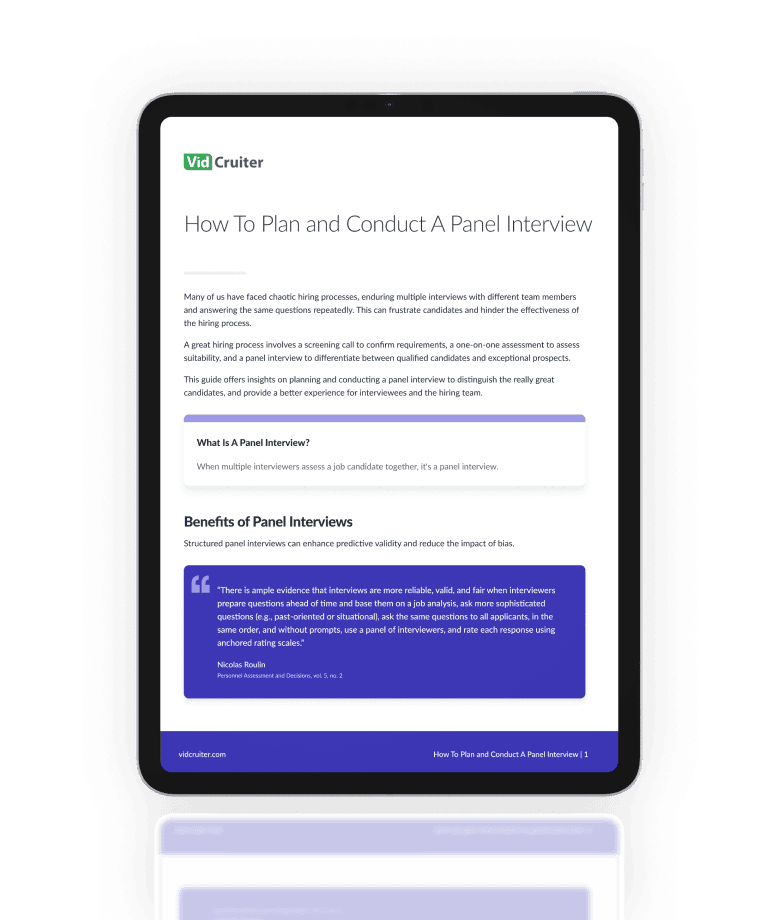
Downloadable Template
Panel Interview Template and Checklist
Get your free copy of VidCruiter’s Panel Interview Template and Checklist. This practical guide:
 Shows you how you can efficiently and effectively build interview panelsTeaches you how to develop a structured panel interview process
By providing email address, you agree to receive updates from VidCruiter.
Read our Privacy Policy
In a panel interview, several interviewers question one candidate in the same session. Each panelist introduces themselves, then takes turns asking questions tied to their role. The candidate answers the group while each interviewer scores the responses independently, which produces an evaluation from several perspectives rather than one.
Most interview panels include two to five members. A singular reviewer loses the benefit of multiple perspectives, while panels larger than five tend to intimidate candidates and slow the process. The right size depends on the role's seniority and how many functions the new hire will work with.
Candidates should research each panelist by name and role, then prepare examples that speak to several audiences at once. Practice addressing answers to the whole group rather than one person, and bring questions for the panel. Treating it as several short conversations in one session helps manage the pressure.
A panel interview usually runs 45 to 90 minutes. The length depends on the number of panelists, the number of questions, and how much time is set aside for the candidate's own questions. Keeping the schedule consistent across candidates protects fairness.
A panel interview has several interviewers and one candidate, while a group interview has one or more interviewers assessing several candidates together. Panels give one applicant a multi-rater evaluation. Group interviews suit high-volume hiring and reveal how candidates interact with one another.
An interviewer should state their name, their role, and how it connects to the open position. Keep the introduction to a sentence or two so the focus stays on the candidate. A brief, clear introduction establishes relevance without using up time meant for questions.
Modernize your hiring process with expert insights and advice.