

How to Design an Interview Guide (With a Template)
Build your own guide for best practice interviewing that covers every part of the interview process.

SHARE THIS ARTICLE


TL;DR
Alongside the rise of flexible, remote work models and distributed, global teams — video interviews have become a mainstay of hiring as recruiters broaden their reach in the search for top talent.
Understanding the practical differences between asynchronous and live video interview formats, and when to use each type for the best results, is essential for HR professionals and recruiters looking to improve their recruitment processes.
While video interviews always happen online, they vary in format, and continue to evolve with the rise of AI-powered tools.
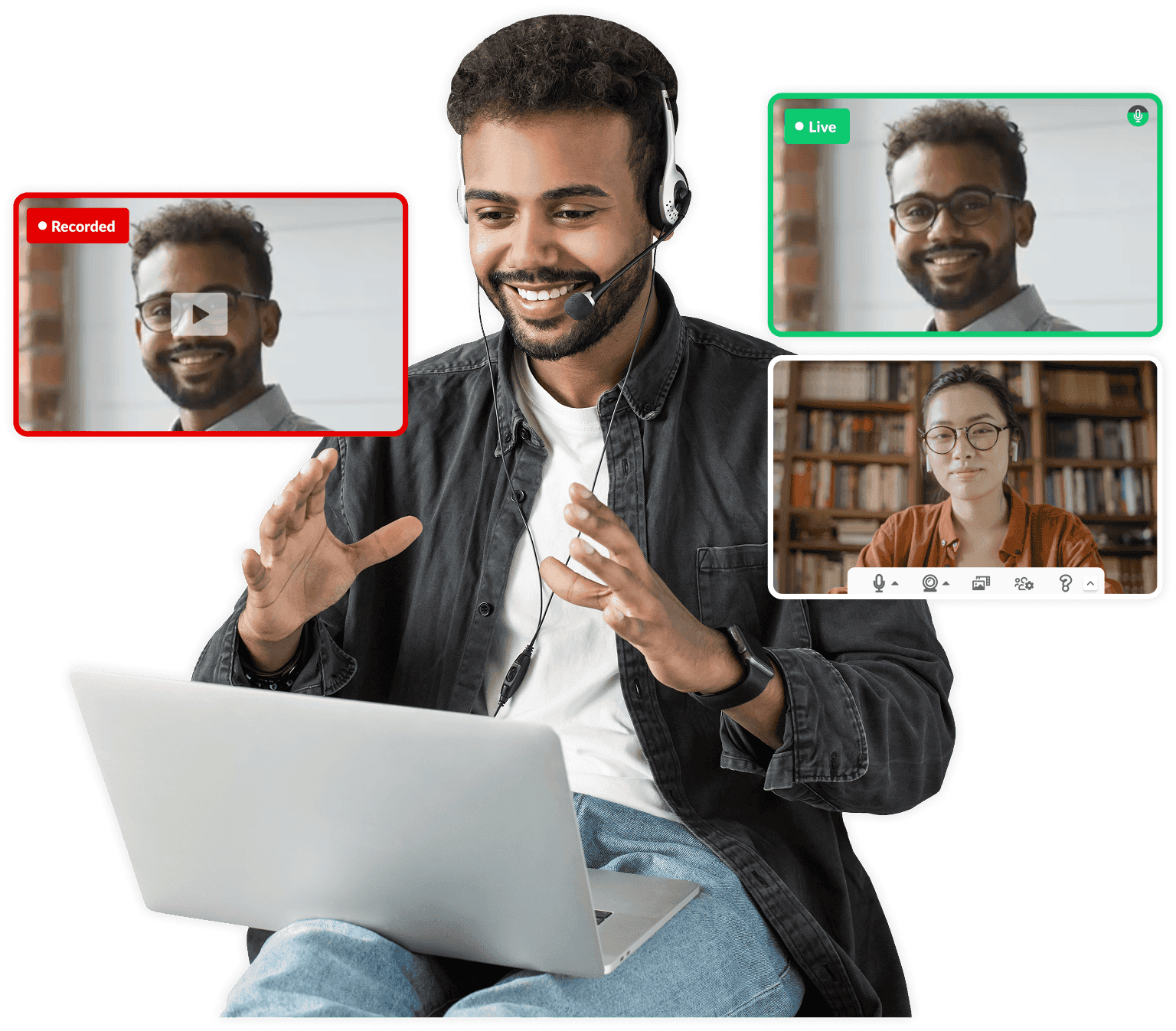
Organizations have traditionally conducted video interviews by holding a conversation with a candidate in real-time, using video-conferencing software. A live video interview is similar to an in-person interview, with the major difference being that it’s held virtually.
How are asynchronous and live video interviews defined?
A live or synchronous video interview is a face-to-face conversation between a candidate and one or more interviewers who join a video call at the same time. All attendees are literally ‘in sync’.
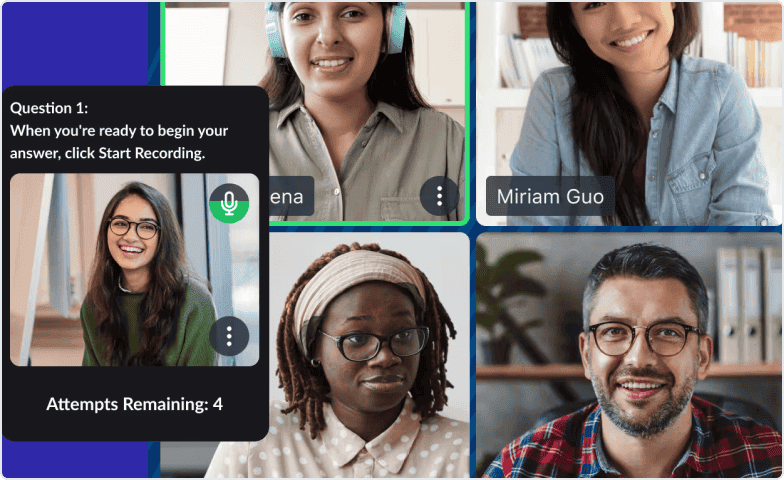
An asynchronous video interview is a one-way, online experience. Candidates receive a series of pre-determined questions and choose where and when to digitally record their answers, often within an allocated timeframe.
Pre-recorded (also known as asynchronous, or on-demand) video interviews have gained significant traction in the past decade — driven largely by larger talent pools, a growth in video interviewing software solutions, and recruiters’ imperative to shave time off their long-listing and short-listing processes.
On-demand video interview platforms provide various options for the design of candidate interactions, such as:
Recruiters and hiring managers can view and score candidates’ pre-recorded videos at any time.
Not having to coordinate schedules or run an interview is a cost-effective approach for employers, especially when there’s a high volume of applications or an organization is hiring across multiple, similar roles. For instance, graduate intakes, entry-level and seasonal positions.

Video interviewing promotes accessibility and efficiency while maintaining a seamless candidate experience. Recruitment processes that incorporate video interviews will see impacts across the following facets:
How do AI video interviews change the effectiveness of hiring?
Both applications of AI raise a number of concerns for HR teams invested in maintaining fairness, validity, and compliance. The unknowable nature of AI models makes their outputs hard to interpret or defend. Unless a video interviewing tool passes scrutiny from an ethical recruitment standpoint it could increase organizational risks.
VidCruiter’s commitment to ethical AI means our video interviewing tools are developed to augment human decision-making, such as incredibly helpful AI interview notes that focus on job-specific competencies.
The advantage of a live video interview is that it’s both convenient and inherently more lively and spontaneous. That gives both hirers and job seekers a clearer impression of what it would be like to interact as colleagues. One study found candidates prefer two-way video interviews to both asynchronous video and in-person interview types (Lighthouse Research and Advisory).
Asynchronous videos are inherently less personal, but also potentially fairer. Pre-recorded video tools typically require a uniform list of questions to be posed to candidates in the same order, and each candidate is given the same amount of time to process and then record their responses.

Getting the interview right is key to securing talent
Candidate preferences for live video interviews is worth noting, as interactions with hiring teams via an interview is the number one thing (other than pay) that influences a person’s decision to accept a job offer, according to Gallup research.
“Employers can put their best foot forward by approaching the interviews with structure and intention, treating candidates with respect and courtesy, and using interviews to highlight their culture and the value they provide to employees,” Gallup states.
Before reaching the shortlisting stage, setting up dozens of live video interviews can be overkill. Asynchronous video tools help employers offer an initial interview to more candidates, with a return on investment that is 6x more cost-efficient than phone screening.
 Pros of live video interviews:
 Cons of live video interviews:
The benefits of pre-recorded video interviews are weighted in favor of recruiters, because the technology is primarily designed to enable more cost-effective hiring.
But increased objectivity is a boon for everyone involved. Incorporating structured interview questions, aligned to a role’s competencies, into a pre-recorded video interview format is an excellent way to mitigate the potential for hiring biases to creep in.
Candidate experience needs to be carefully managed. Online discourse shows a number of candidates find one-way video interviews jarring, stressful or even insulting. However, for some candidates — especially those with multiple, competing priorities in their life —a quick and indirect method of communication is welcomed. Especially when they understand that the alternative could have been no interview at all.
Pros of asynchronous video interviews:Cons of pre-recorded video interviews:
Most people management experts agree that pre-recorded video assessments have a narrower set of use cases if you want to avoid overcomplicating your recruitment process or alienating top talent.
Asynchronous video interviews work best for:
Live video interviews work best for:
Consider your overarching recruitment strategy and process design to ensure you incorporate video interviewing thoughtfully. For instance, determine how many ‘touches’ there should be before a quality candidate can realistically expect to speak with a real human.
Candidates are already skeptical of modern hiring practices and whether their applications are reviewed at all by human recruiters — and therefore, whether an application is worth their time. One study showed that 57% of candidates had aborted a job application half-way through due to overly complicated requirements (LiveCareer).
Because candidates are less accustomed to asynchronous video interviews, using them appropriately is vital. A 2026 study involving over 3,000 job applicants found asynchronous video interviews may deter candidates that your organization is keen to attract. The research found:
If and when you introduce any automated assessment, carefully examine the take-up rate compared to how many candidates you invite, to see whether the drop-off is acceptable.
It’s also important to use candidate communications to counter perceptions that your organization isn’t willing to invest time and energy into engaging with candidates. After all, a strong employer brand is cost-effective in its own right, helping to make hiring up to 2x faster and potentially halving cost per hire (LinkedIn).
For instance your organization could tailor its messaging to:
Each type of video interview serves a different purpose for recruiters. Asynchronous and live video interviews, or a mix of both, can help your organization balance efficiency and human connection when applied at the right moments during hiring.
The major difference between live and asynchronous video interviews is the level of interaction between candidates and recruiters. Live video interviews enable face-to-face conversation, while asynchronous interviews don’t require an interviewer and job seeker to be present at the same time. In a one-way interview, pre-determined questions are sent to a candidate who then records their answers and submits them to the employer to assess.
Yes, asynchronous video interviews considerably free up administrative time spent on recruitment. Critics question the time-saving capacity of asynchronous videos given that recruiters do still need to find time to review candidate responses (if they don’t rely on AI-led scoring). But access to pre-recorded responses streamlines workflows in the following important ways:
Modernize your hiring process with expert insights and advice.