

How to Schedule an Interview
Interview scheduling is a critical part of recruiting. Discover best practices for how to schedule an interview, with templates and tools to make it easy.
Written by
VidCruiter Editorial TeamReviewed by
VidCruiter Editorial TeamLast Modified
Feb 17, 2026
SHARE THIS ARTICLE


TL;DR
Recruiting teams have more hiring data than ever before, but turning that information into clear decisions remains a challenge. As a result, hiring confidence is low: only 23% of organizations would be willing to rehire most of the employees they gained in the past year, according to HR.com’s latest Future of Recruitment Technologies report.
Despite this, analytics adoption is limited. Only 35% of organizations currently use recruitment analytics, creating a significant opportunity to strengthen hiring decisions. This opportunity is strongest when data is captured and reviewed in real time, particularly during interviews, as evaluation decisions are unfolding.
Only 35% of organizations currently use recruitment analytics, creating a significant opportunity to strengthen hiring decisions
This guide explores the most important analytics features to look for in interview platforms, and how to use them to support better hiring decisions.
Data-driven hiring decisions depend as much on when insights appear as on what they show. Many recruiting analytics focus on high-level candidate pipeline metrics or on retrospective reporting, so issues only become visible after candidates have disengaged from the hiring process or timelines have slipped. In either case, it’s often too late to take action that reverses the situation.
As an alternative, real-time analytics tools make data visible during interviews, which is particularly beneficial when evaluations are in full swing. Capturing live data allows hiring teams to identify stronger candidates sooner and move them forward. Some other advantages of real-time analytics include:
The goal is always to give teams timely, trustworthy intelligence they can use to make better hires — never to offload recruiting decisions to technology entirely.
The most effective interview platforms provide meaningful insights you can understand and act on. The following analytics capabilities separate basic reporting from tools that genuinely support data-driven hiring decisions.
At a minimum, interview analytics should provide a clear, real-time view of how many candidates have reached the interview stage and where they currently sit within it. This includes visibility into interviews that are:
Real-time pipeline visibility helps recruiting teams understand interview flow as it happens, rather than relying on delayed reports. When interview volumes spike or stall, teams respond immediately by reallocating interviewer capacity or adjusting timelines.
Completion and drop-off analytics reveal whether candidates make it through the interview process once invited. Tracking where candidates abandon the process helps teams identify friction points, such as unclear instructions or technical barriers.
Additionally, time-to-interview and interviewer responsiveness metrics show how quickly candidates are scheduled and how promptly interviewers submit feedback. Together, these signals help recruiters understand why candidates are disengaging, enabling them to overcome any blockers.
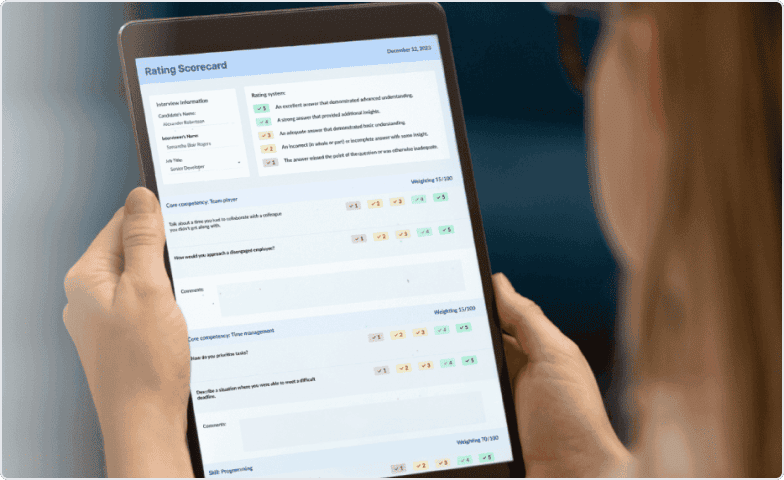
Candidate evaluation analytics focus on the evidence interviewers capture, such as structured interview ratings against defined criteria and interview responses.
To make hiring decisions more transparent and defensible, recruiters and hiring managers can compare candidate data using the same framework. These analytics support better decision-making by organizing interview evidence clearly, while keeping final judgment firmly in human hands.

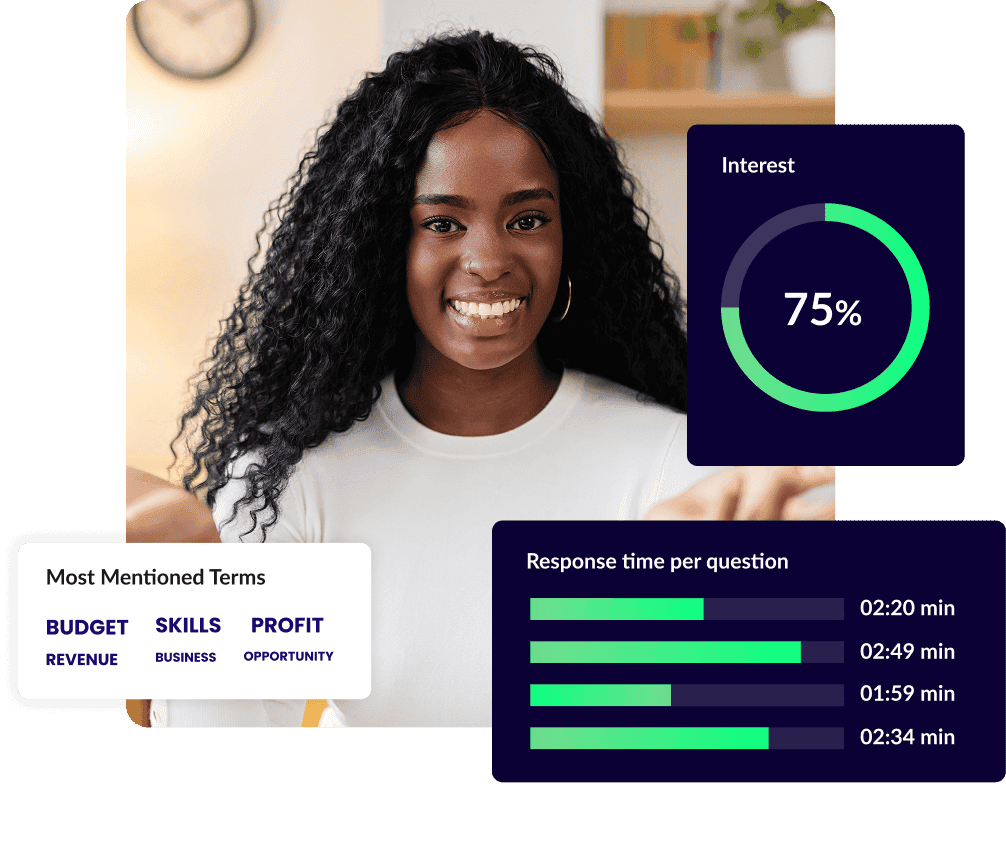
Candidate engagement analytics help teams understand how candidates experience the interview process. This includes signals such as:
These insights help recruiters assess whether interview formats are working as intended, or if they engage or frustrate candidates.
Hiring teams may evaluate candidates differently, influenced by implicit biases or varying perceptions of how to score fairly.
The Hidden Impact of Human Instinct
A paper on Cognitive Biases and Their Influence on Critical Thinking presents that researchers have discovered over 200 different cognitive biases that result in inaccurate judgments or decisions.
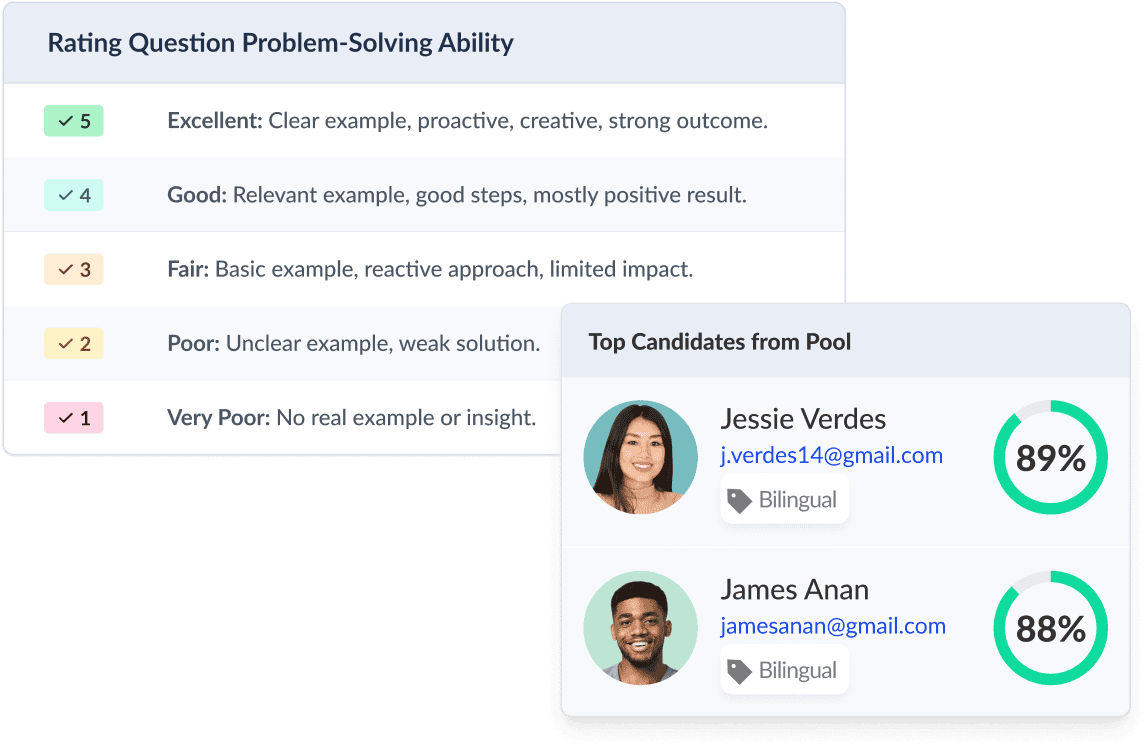
To spot where differences occur, structured scoring analytics highlight patterns such as score variance, inconsistent application of criteria, and areas where interviewers frequently disagree.
These insights support evaluation calibration, helping hiring teams align on what “good” looks like so they can assess candidates fairly and consistently.
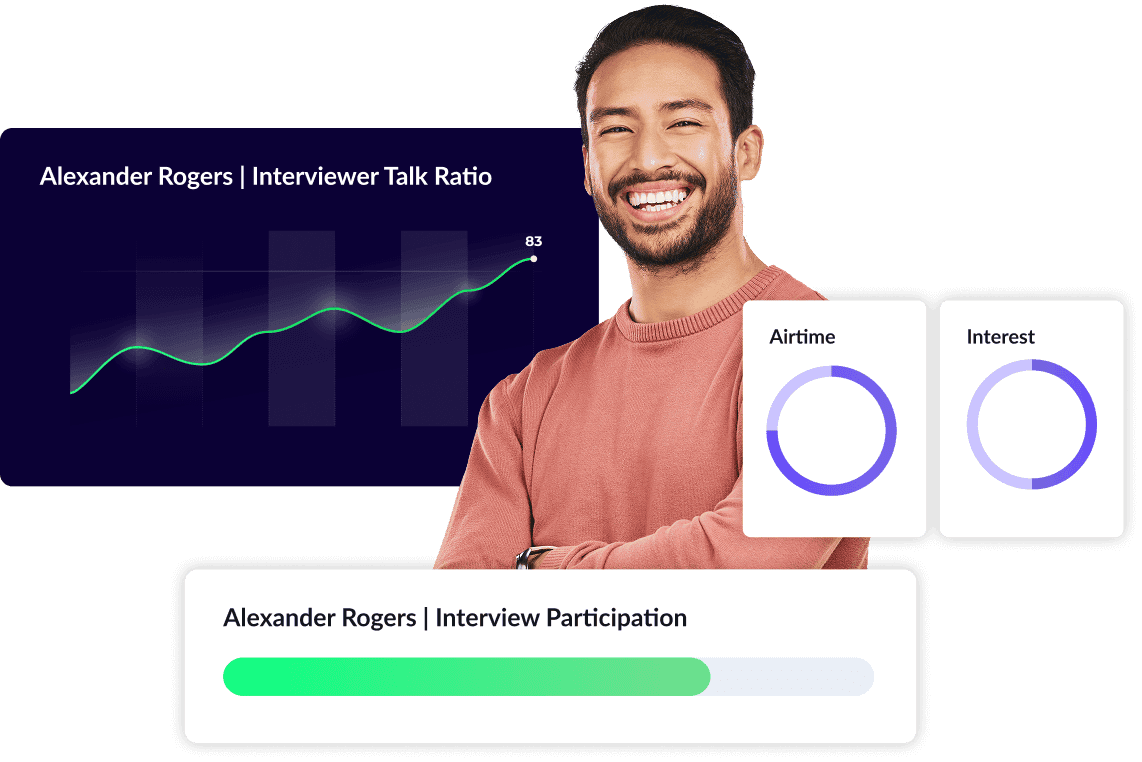
Productivity metrics identify where interview coordination is creating drag, so hiring can move forward without increasing pressure on already-stretched team members. To learn how interviews are carried out across the team, analytics reveal:
Based on the numbers, hiring teams can unclog recurring bottlenecks at the interview stage and keep candidates moving through the hiring funnel.
Configurable hiring analytics dashboards should provide immediate visibility into how you’re progressing toward your hiring goals. For example, if the goal is to improve time to hire, a chart or battery-style widget can show if interviews are progressing within target timeframes.
The best recruitment analytics software lets you export these details as easy-to-read reports you can share with key stakeholders.
Analytics can easily become overkill if you’re collecting huge amounts of data and don’t have the time or expertise to comb through it all. Look out for the following red flags to avoid creating noise in your quest for insights.

Overall, time to hire is a useful metric that shows how long it takes to move from application to offer. The State of the Hiring Process in 2025 report finds that the average time to hire is now 68.5 days, up from 44 days in 2023, though this varies by industry, company size, and location.
But measuring time to hire alone doesn’t pinpoint where time is lost during specific recruitment interactions, such as interviews. Without stage-level insight, you can’t see whether delays are happening while candidates wait to be scheduled, between interview rounds, or while feedback sits unreviewed. All you’re left with is a single number, and no clear way to act on it.
Interview data insights often include data such as the number of interviews completed, invites sent, or video interviews recorded. This information is useful for calculating activity, but doesn’t necessarily correlate to an organization’s hiring goals. Without connecting interview volume to results, such as shortlisting, offers, or quality of hire, these hiring metrics add noise rather than clarity.
Interview completion rates explain how many candidates actually attend an interview, allowing hiring teams to assess them and decide whether to move them forward. For example, a company might:
On their own, these numbers don’t show why candidates dropped out before the interview stage, or which interviews were completed. Without context around interview format or stage, completion rates don’t provide the detail to improve the interview process for next time.
When productivity metrics zoom in on activity, like back-to-back diary appointments, they sometimes miss the effort required to keep interviews on track, such as rescheduling or managing no-shows.
Without visibility into where interviews stall or need to be repeated, it’s easy to mistake busyness for progress and overlook the issues that slow down hiring.
Some interview platforms generate candidate rankings or scores using algorithms without showing how those results were produced. If hiring teams can’t see the criteria, inputs, or logic behind a ranking, they can’t understand what those numbers mean or whether they reflect fair evaluation criteria.
In particular, a University of Washington study found racial, gender, and intersectional biases in how three state-of-the-art language models ranked resumes, proving how automated scoring can create inequities when it isn’t auditable or explainable. Look for platforms that make the reasoning behind candidate scores visible, so recruiters can understand and question the results.
A thoughtful plan helps recruiters collect data with a purpose, then turn analytics into decisions hiring teams can act on.
Define Your Hiring Goals
Without clear goals, it’s easy to track everything and learn very little. Defining priorities upfront keeps analytics focused on the interview stage, and on changes you can actually make.
To translate broad intentions into something analytics can realistically support, start by clearly defining your hiring goals. The SMART framework is one way to do this, by setting goals that are specific, measurable, achievable, relevant, and time-bound.
Example: Reduce the average time between sending an interview invitation and completing the interview from 10 days to five within the next three months.
Select Suitable Recruitment Metrics
Select recruitment metrics that relate directly to your overarching goals. These might include some of the following:
Keeping the list focused makes it easier to monitor changes and act on them during the hiring process.
Combine Analytics with Human Evaluation
Recruitment analytics work best when they inform discussion, rather than replace it. Data can highlight delays, inconsistencies, or patterns in interview activity, but hiring decisions still depend on context that metrics can’t capture on their own.
Use analytics to support interview reviews and hiring conversations, not to shortcut them. The goal is evidence-backed human judgment.
Assign Ownership for Monitoring and Acting on Insights
Recruitment analytics need a clear owner; in practice, this is usually the person closest to interview execution, such as a:
Sometimes, ownership is based on triggers at certain points. For example, if analytics highlight that candidates wait too long between interview stages, clarify who is responsible for moving things forward. Making ownership explicit prevents analytics from becoming passive reporting and keeps someone accountable for intervening when the interview process starts to drift.
Review and Refine Your Recruitment Data
The data you collect today may no longer be relevant next quarter or year. Review your metrics regularly to check they’re still in line with your goals. This is especially important if anything key changes, such as hiring volume or a process adjustment.

VidCruiter is an end-to-end hiring platform that helps employers and candidates find the perfect fit. Combining pre-recorded and live interview capabilities with related recruiting activities, VidCruiter provides a structured, data-driven way to support hiring decisions.
VidCruiter’s approach to recruitment data analysis is built around analytics that support human judgment, including:
This approach brings analytics into the flow of interviewing, rather than treating them as a post-process review. When teams can see what’s happening as it happens, they move from reactive to proactive and become better positioned to keep hiring decisions on track.
Recruiting analytics uses hiring data to understand how recruitment processes perform and where they can be improved. It typically involves analyzing metrics across the hiring lifecycle, such as application volume, interview progression, time to hire, and candidate outcomes, to support better hiring decisions.
The 5 Cs of recruitment are a framework used to assess candidates more consistently during hiring. They commonly refer to:
The four pillars of analytics generally refer to different levels of data analysis:
In recruiting, interview platforms most commonly support descriptive and diagnostic analytics, helping teams understand interview performance and address issues as they arise.
Recruiting analytics doesn’t require advanced data science skills. Most teams rely on:
Modern interview analytics tools are designed for recruiters to use directly, without needing technical or statistical expertise.
Modernize your hiring process with expert insights and advice.