
Impact of AI Interviews for Hiring
AI is rewriting the interview process. Here's what it means for hiring — and whether we're ready.
SHARE THIS ARTICLE


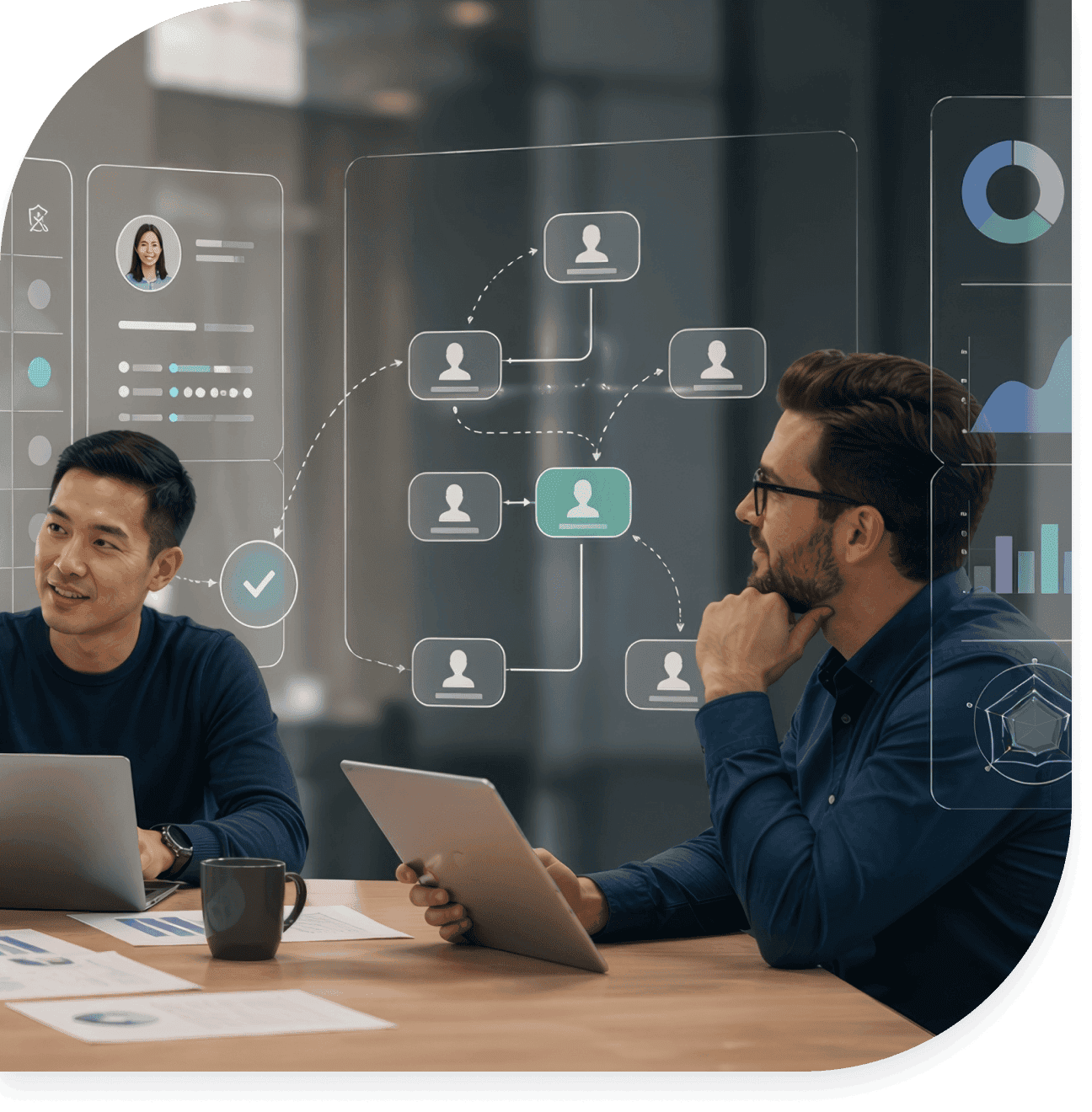
Interview intelligence is the use of AI, ML, and automation to support recruiters and hiring teams as they run structured interviews. It analyzes interview data to give HR teams a clearer picture of how their interviews perform, including parts of the process like interview scheduling and interviewer feedback.
The focus is the process and the people who run it, not automatic candidate decisions. Interview intelligence organizes information, audits questions, and surfaces patterns so humans can make better-informed choices.
Because it relies on AI, hiring experts recommend pairing it with a clear framework for responsible use. A documented AI framework defines what AI does, what it never does, and where human judgment takes over.
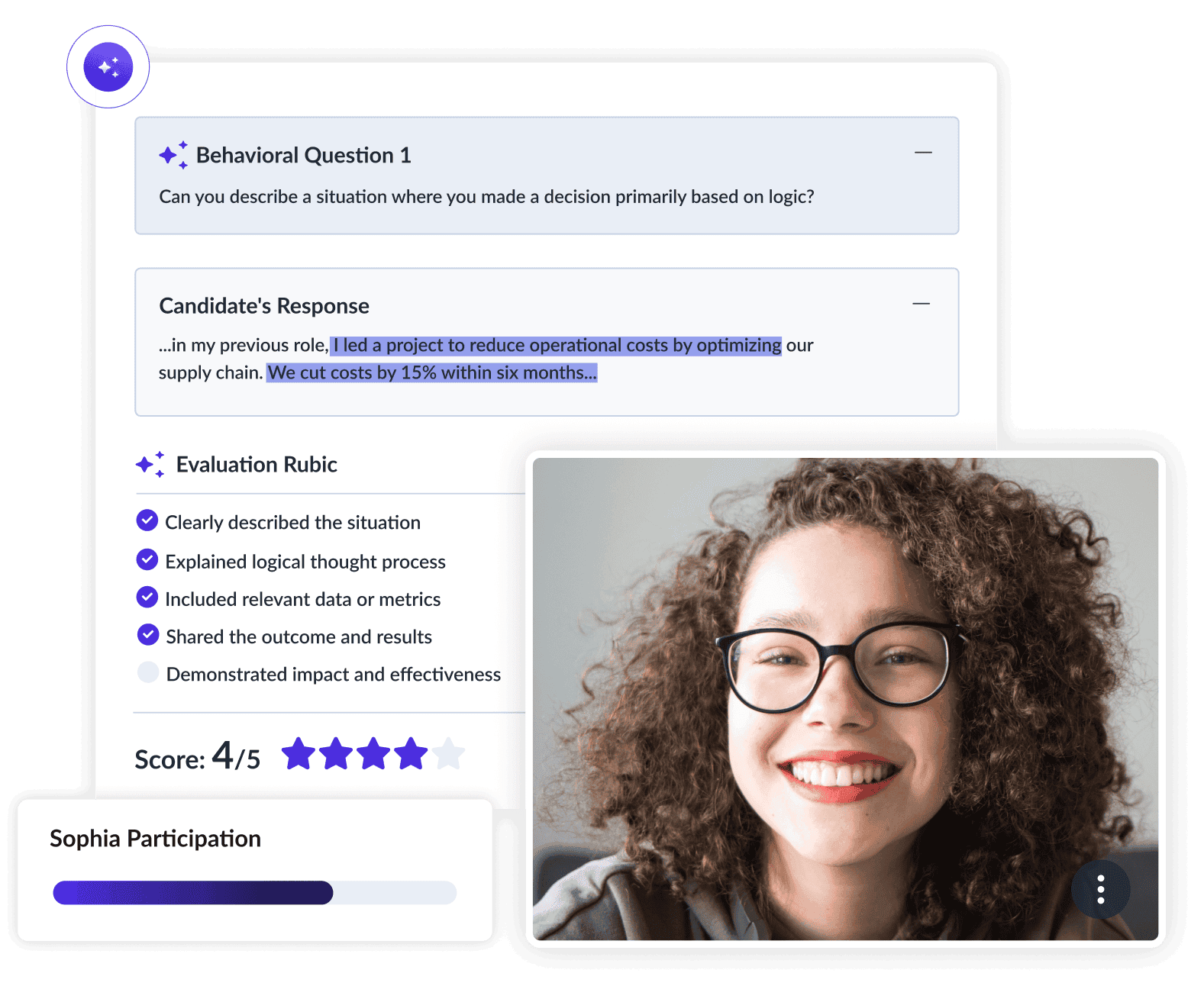
VidCruiter builds interview intelligence into a structured interviewing platform that keeps people in control of every decision. The aim is to identify the strongest predictors of job performance for a specific role and organization, then support the humans who run the interview.
For more than a decade, VidCruiter has supported structured hiring for organizations across the public and private sectors. This guide explains what interview intelligence is, how it works across live and pre-recorded interviews, and how it differs from related tools.
Responsible interview intelligence rests on four pillars. Set these in place before rolling it out.
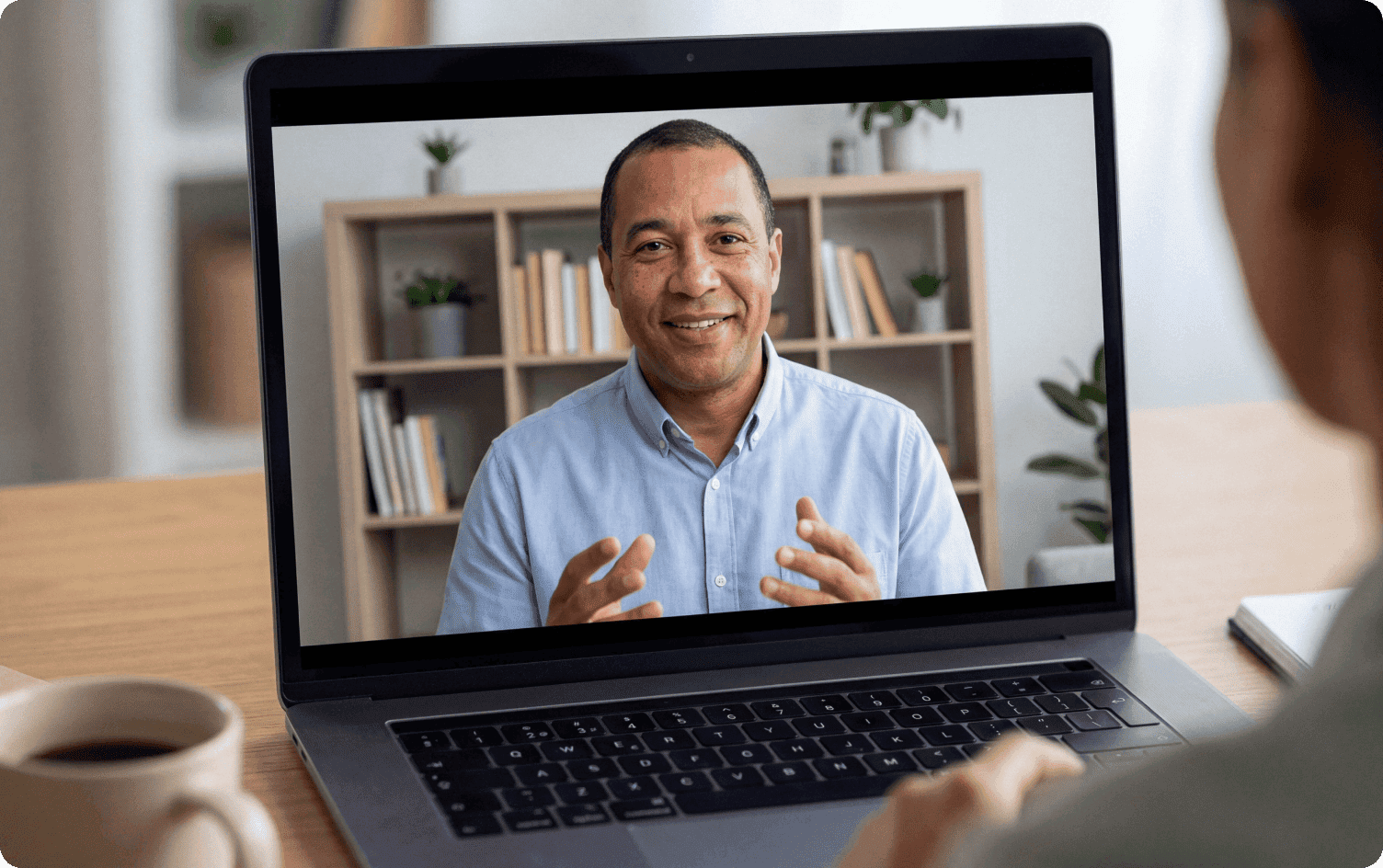
Interview intelligence is human-first. It improves the experience for candidates and interviewers while keeping people in the lead. Industrial and organizational psychologists (I/O) pre-validate interview content before use, and decisions always stay in human hands. Human oversight ensures people remain accountable for AI-assisted decisions.
AI, ML, and automation handle the supporting work: administrative tasks, interview planning, record-keeping, question audits for potential bias, analyzing interviewer feedback, real-time coaching, and compliance checks. The job of a responsible program is to define exactly what AI does. At its best, AI organizes, analyzes, and routes information so people can decide within a structured interview process.
Interview intelligence collects and analyzes data from an organization's own process, which creates a way to improve interviewing over time. Teams can:
Interview intelligence uses AI to spot patterns in candidate evaluations that point to ways to make interviews and ratings more inclusive. It can prompt interviewers in real time about talk-time distribution and interruption rates, so they can adjust their approach and improve the candidate experience.
It also reports on panel composition and areas of over- or underrepresentation, so an organization can see whether it is meeting its diversity and inclusion goals. With that data, teams can take steps toward fairer representation and a more equitable interview experience for every candidate.
Interview intelligence can support accessibility accommodations
Interview intelligence helps interviewers offer accommodations without breaking the consistency of a structured interview. Tools that give real-time feedback can suggest accommodations mid-interview if an interviewer learns of a barrier. They can also rephrase or reorder questions so a candidate understands them, while staying inside the parameters set before the interview.
Interview intelligence turns an organization's own interview data into specific findings it can act on. It improves three areas in particular.
Data from a candidate's interview can raise the quality of hire. Teams can trace the path from interview performance to job performance and pinpoint the competencies that predict strong results.
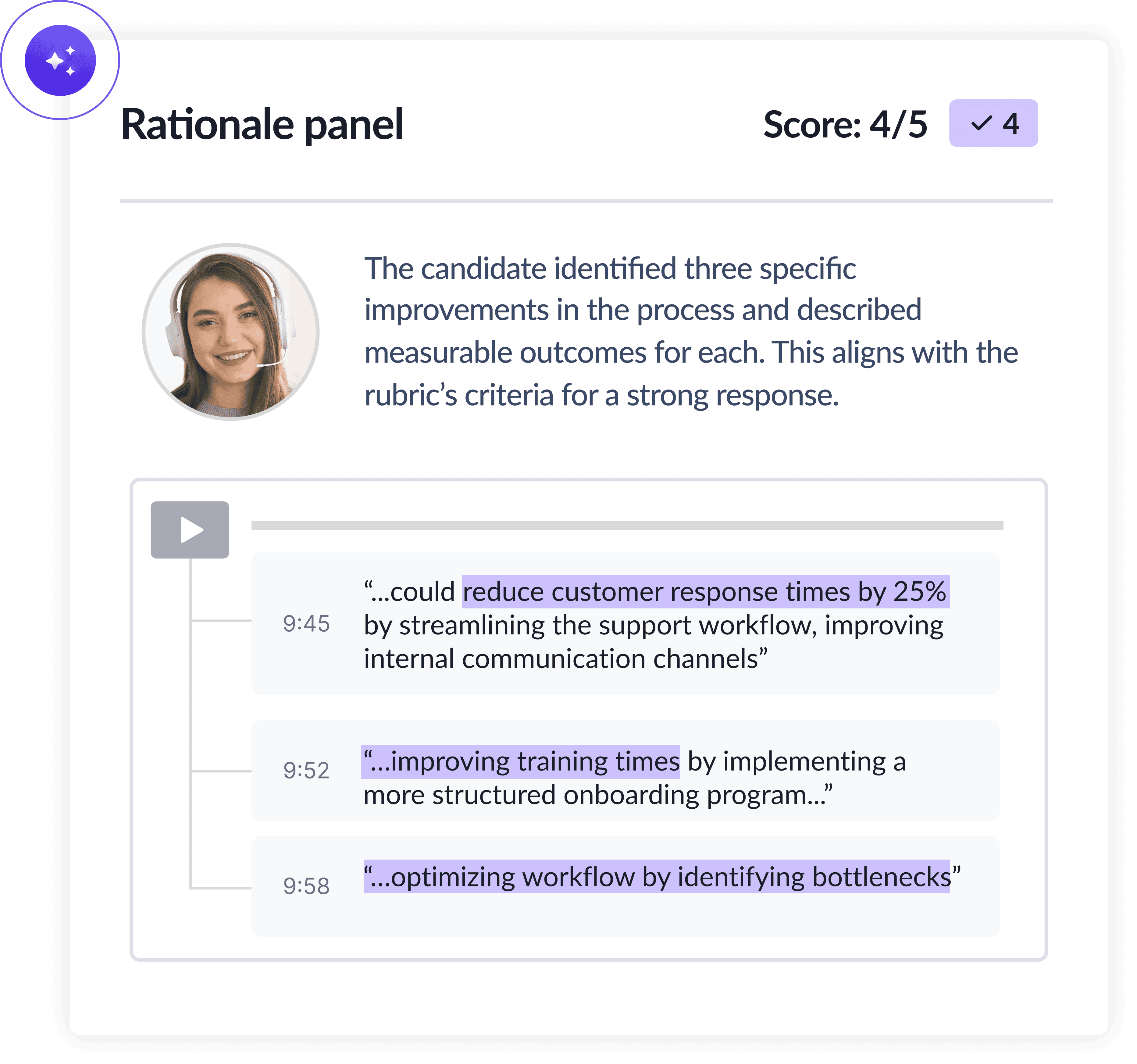
Some interview questions lead to better hiring decisions, and some add little. Interview intelligence shows which questions connect to performance in the role and at the organization, so weak questions can be replaced.
AI tools give feedback in real time, offer a second perspective, and make interviewers aware of their own habits. Interview intelligence flags training opportunities based on talk time, interruptions, interview dominance, non-compliance, and more, which helps surface top performers and raise overall interview quality.
Interview intelligence applies to pre-recorded video interviews as well as live ones. It supports raters in three main ways.
It is hard for people to judge their own behavior, even when they are self-aware. After a rater finishes, AI returns data-backed feedback on their ratings, and as it gathers data over time, it can flag their tendencies to help them improve.
By running sensitivity audits on questions, interview intelligence flags areas with a potential risk of bias. When raters review pre-recorded interviews, AI can add context to mitigate the impact of bias in the moment.
Raters can rewatch a pre-recorded interview as often as they need, and AI transcription saves time by turning each interview into searchable text. A transcript lets raters find specific words or phrases quickly.
The value of interview data is in what you do with it. The next step is acting on AI-generated data points to improve a structured interview process.
The main ways to improve the process with interview intelligence are:
Research backs the shift. A 2020 study in Business Horizons found that AI-enabled recruiting moved from optional to expected as the value of human capital rose. The authors warned that organizations slow to adopt AI in recruiting risk losing even employees they consider engaged to competitors running targeted, customized outreach.
Interview intelligence coaches interviewers with AI-generated feedback, which doubles as professional development and strengthens the interview process.
It adds transparency across the process. Feedback on performance builds awareness, so interviewers can correct themselves. If an interview drifts from its set parameters, the tool can caution the interviewer and guide them back into alignment. HR teams can also monitor interviewers and build individual training plans for specific areas. Because the data is available in real time, teams get both immediate corrections and long-term growth.
Guidelines for ethical AI use
How you bring AI into hiring shapes its ethical and legal footprint. The simplest way to stay on the right side of both is to use AI to support best practices and improve the process, not to assess, screen, or select candidates on its own. A documented approach to ethical AI makes those limits clear.
Interview intelligence focuses on the interview stage and the people who run it. Two related categories are often confused with it: talent intelligence and recruiting intelligence.
Talent intelligence uses AI, ML, and automation to gather data about candidates from their interviews, then analyzes it to find talent patterns and inform decisions. A common example is software that judges candidates automatically by their body language, facial expressions, word choices, and tone of voice. Interview intelligence does not judge candidates this way, and some experts question both the ethics and the validity of scoring people on those signals. The only people interview intelligence assesses are the interviewers. When VidCruiter applies AI to candidate evaluation, through AI candidate screening, a human always makes the final decision.
Recruiting intelligence uses AI assessment tools to find and attract the best candidates for a role. An example is a chatbot that screens candidates for a specific job. Screening with AI can speed things up, but leading experts flag real risk when AI makes unchecked decisions. It is often hard to see how or why a system filters candidates out, and qualified people can be removed for reasons unrelated to job performance, introducing the potential for bias.
The difference comes down to focus. Recruiting intelligence sources candidates. Interview intelligence builds a process that identifies the right candidate once they reach the interview. The table below compares the three at a glance.
Factor
Interview Intelligence
Talent Intelligence
Recruiting Intelligence
Main focus
The interview process and interviewers
Candidate data from interviews
Sourcing and screening candidates
Who AI assesses
Interviewers
Candidates
Candidates
Role of AI
Organizes data, audits questions, coaches interviewers
Scores candidate traits like tone and body language
Screens and filters applicants
Who decides
A human, every time
Often AI-influenced
Often automated
Main risk to watch
Low by design, since people decide
Validity and ethics of scoring people
Qualified candidates filtered out unseen
Used well, interview intelligence improves the quality of hire, speeds up workflow, and supports more consistent interviews. It also mitigates the impact of hiring bias, supports interview compliance, improves the candidate experience, and gives teams data to improve the process over time.
Interview intelligence connects AI, ML, and automation to a standardized interview process to produce data and reports. Some tools also offer real-time support during the interview, such as interviewer coaching and question prompts. People review the output and make every decision.
No. Interview intelligence assesses the interview process and the interviewers, not the candidates. It organizes data, audits questions, and coaches interviewers. When VidCruiter applies AI to candidate evaluation, through AI candidate screening, a human always makes the final call.
Interview intelligence supports ethical, compliant hiring when it follows a clear framework. The safest approach is to use AI to improve the process and support best practices, not to screen or select candidates on its own. A documented ethical AI framework sets those boundaries.
Yes. Interview intelligence works with both live and pre-recorded interviews. For pre-recorded interviews, it can transcribe each recording into searchable text, provide feedback on rater tendencies, and flag questions with a potential risk of bias so raters can mitigate its impact as they review.
Hiring teams use interview intelligence to modernize a structured interview process they already run. It adds transparency, feedback, and compliance support, and it gives the team data to analyze and improve how they interview. Skipping it leaves that opportunity on the table.
Stick to your organization's structured interview process as closely as you can, and complete the training your team provides, including current anti-bias training. Strong interviewers also act on feedback. Interview coaching, especially the real-time kind that advanced interview intelligence tools offer, helps you correct habits and improve.
Modernize your hiring process with expert insights and advice.