


Interview Scheduling
The full guide to planning and coordinating interviews.
Written by
VidCruiter Editorial TeamReviewed by
VidCruiter Editorial TeamLast Modified
Jul 24, 2026
SHARE THIS ARTICLE


Candidate ghosting happens when a job seeker drops out of the hiring process without a word, and interview no-shows are its most disruptive form. You can reduce both by improving the candidate experience and by automating the scheduling steps that cause confusion. Automated interview scheduling with calendar integration is one of the most direct fixes, because it confirms times, sends reminders, and lets candidates reschedule their interviews. This guide explains why candidates ghost, what no-shows cost, and how to keep more interviews on the calendar.
Candidate ghosting is when a job seeker abandons the recruitment process without explanation. A candidate no-show is the version recruiters feel most, when someone accepts an interview and never arrives. It can happen at any stage: after applying, before an interview, or even after a verbal offer.
Ghosting has become common enough that many job seekers see it as acceptable. An Indeed survey found that 70% of US job seekers consider it fair to ghost an employer, often because they have been ghosted themselves. The top reasons were a poor fit with the role, a poor fit with the organization, and pay that fell short.
An interview no-show stalls your hiring timeline and adds cost, mostly through lost productivity. Recruiters and interviewers lose prepared time, and the role stays open longer. The damage compounds when teams have already acted on the expectation of a hire.
In one survey, recruiters reported that candidate ghosting was frustrating for specific reasons:
had already rejected other quality job applicants.
had already begun onboarding planning.
said ghosting created more work and stress.
No-shows are also widespread. Past Indeed research found that 46% of US job seekers had failed to attend a scheduled interview, and the share who planned to ghost in future searches rose from 37% in 2019 to 62% in 2023.
The interview stage decides offers
The interview is the top factor other than pay in whether a candidate accepts a job, according to Gallup. Aptitude Research found that one in two organizations have lost quality hires to a slow or inconsistent interview process.
Candidates ghost recruiters for two main reasons beyond ordinary emergencies: weak coordination and weak engagement. Some no-shows are simply life, such as illness, a family issue, or a car that would not start. But the avoidable causes sit inside the hiring process.
Poor coordination and communication. When hiring is split across systems and manual steps, confirmations and reminders get missed. Candidates lose track of details, and recruiters show up to an empty room.
Weak role alignment and engagement. Candidates often apply to many roles and accept an interview before they fully understand it. A bad review, low pay, or an impersonal recruiter interaction can make them quietly disengage.
Candidates also rarely explain their absence. They want to avoid an awkward conversation, they feel overwhelmed, or they assume the employer will not care.
Recruiters can prevent interview no-shows by getting four parts of the candidate experience right. The same four steps explain how to reduce interview no-shows without adding manual work.
Scheduling is the bottleneck
A survey of more than 1,500 hiring managers found most believe hiring takes longer than before, and 40% pointed to scheduling and conducting interviews as the slowest part (Robert Half).
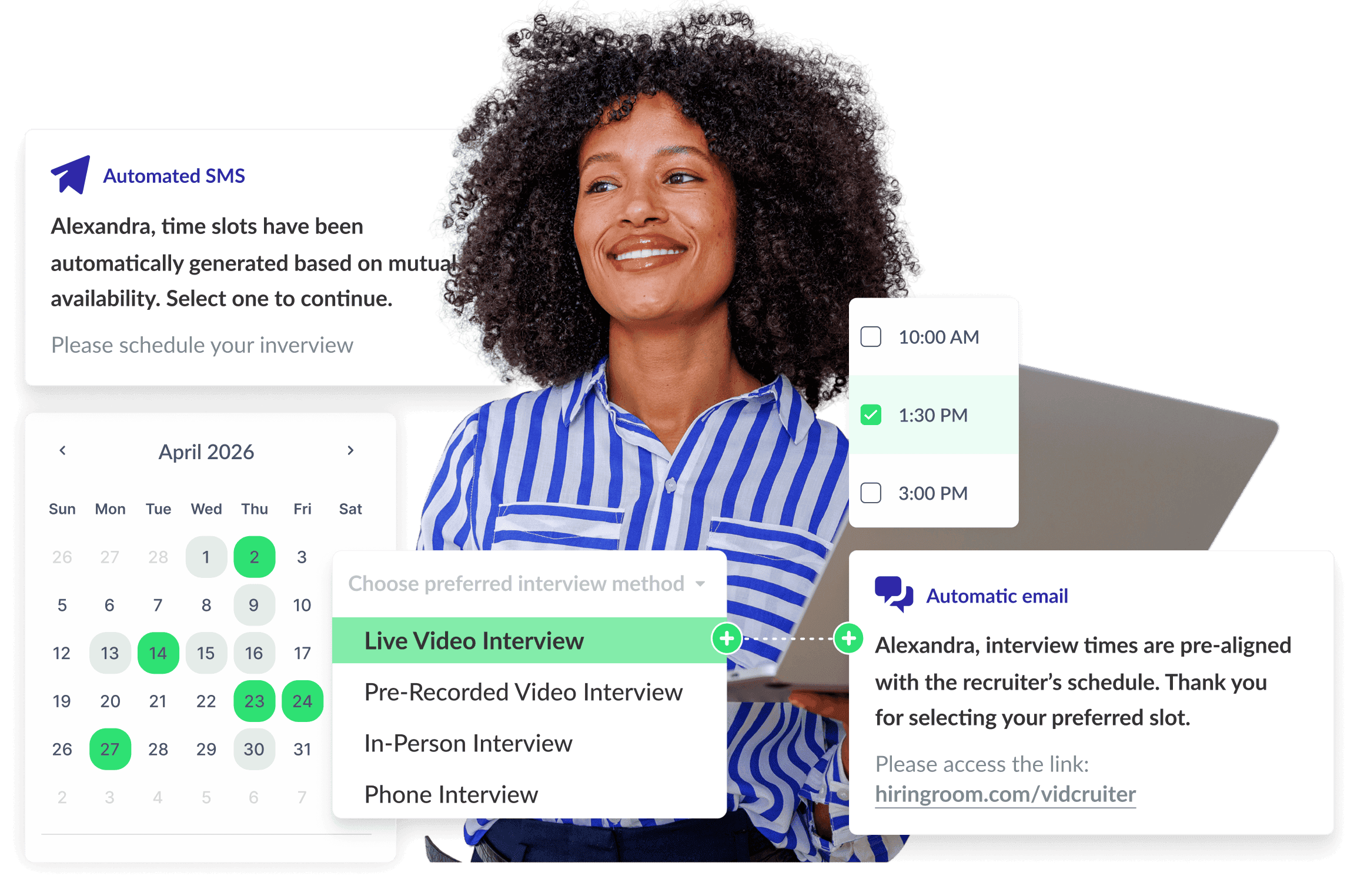
When teams are stretched, technology does the repetitive work. Automated scheduling syncs interviewer and candidate availability without back-and-forth email. Automated reminders and pre-interview messages share logistics and prompt attendance. Self-rescheduling lets candidates pick a new time inside set blocks instead of dropping out.

VidCruiter's interview scheduling software with calendar integration improves attendance by removing the friction that causes drop-offs. It works across four areas.
Calendar integration syncs interviewer calendars in real time, so interviews are only booked during confirmed open slots. The scheduler:
A central confirmation tracker shows which candidates have received and acknowledged interview requests. You can also send details automatically based on interview type, such as preparation guides, directions, or technical requirements for online sessions. Clear information gives candidates certainty and signals that your team values their time.
Self-scheduling lets candidates book or rebook an interview based on their availability. They can act the moment a conflict appears, rather than wait for business hours and lose interest. You can also let candidates choose a format, such as a phone screen or a pre-recorded video interview, which suits different comfort levels.
Reminders go out by email or SMS at intervals you set, repeating the date, time, and location. Candidates who have not yet booked a slot can be nudged automatically.
Text reminders work
Studies show that a text reminder one to two days before an appointment can cut no-shows, in some cases by up to 40%. Texts are immediate and hard to ignore.
Most recruiters wait 10 to 15 minutes before recording a candidate as a no-show. Many send a quick text or email at the five-minute mark to ask whether the candidate is still joining.
A no-show follow-up email should ask for a brief explanation and, where policy allows, offer to reschedule. Keep it polite, include clear rescheduling instructions, and set a deadline for the candidate to reply.
Yes, and many strong candidates miss interviews for legitimate reasons. Offer one reschedule through a self-service link so the candidate can pick a new time without further email.
Yes. Timed SMS reminders before an interview improve attendance because they reach candidates instantly and prompt them to honor the commitment they made.
Modernize your hiring process with expert insights and advice.