


ATS-Friendly Resumes: A How-To Guide
Increased recruitment automation through applicant tracking systems, means you need to format your resume right.
Written by
VidCruiter Editorial TeamReviewed by
VidCruiter Editorial TeamLast Modified
Dec 5, 2025
SHARE THIS ARTICLE


TL;DR: How to Spot Fake Job Postings and Avoid Them
As if searching for a job in today’s economy wasn’t hard enough, jobseekers are navigating an increasing number of fake job postings and ghost jobs.
With a cooling labor market and long-term unemployment at a three-year high according to US Bureau of Labor Statistics data from August 2025, you can’t afford to have your time or money wasted by insincere job posters.
Learn why fake and ghost jobs exist, how to tell when a job might not quite be real, and what you can do to protect yourself and push back on fake jobs.

Any advertised job that isn’t genuinely likely to result in a person being employed might be described as a fake job posting. But typically, fake jobs are designed to illegally defraud you, while roles listed to give a false impression of hiring are instead known as ghost jobs.
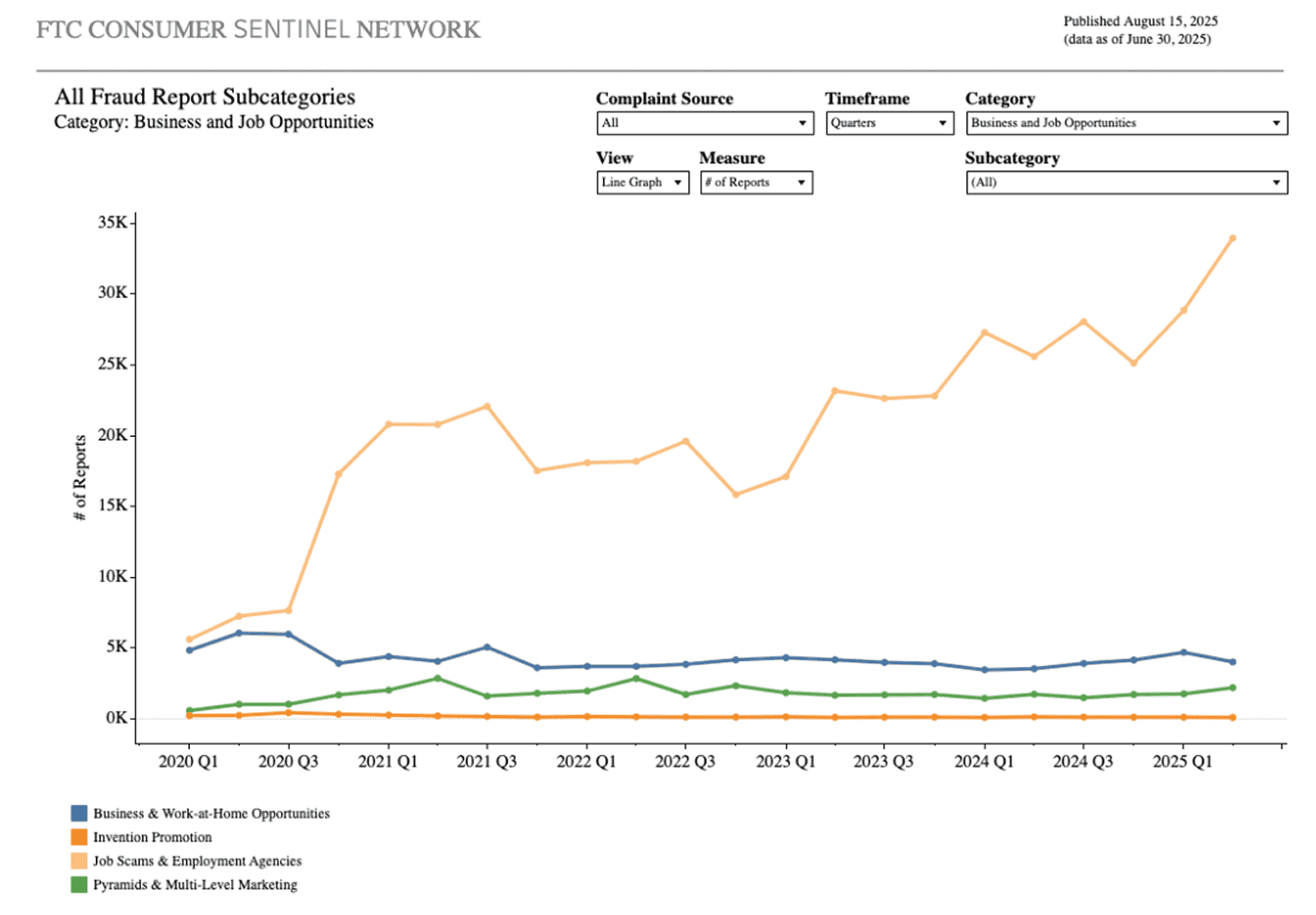
Business and job opportunity scams is the eighth most-reported category of scam noted by the Federal Trade Commission (FTC). Reports of job scams tripled between 2020-2024, with reported losses rising from $90 million to over $500 million in that time.
Americans are losing more to job scams
In just the first two quarters of 2025, overall losses to jobs scams are already $298 million. As of June 30, 2025 over 62,700 people had reported being scammed by fake job opportunities, and around 30% of those people lost money — with the median loss being just over $2,000.
Ghost jobs also seem to be on the rise. Recently, multiple surveys and analyses have shown that between 20%-30% of job postings you see online may be non-existent jobs.
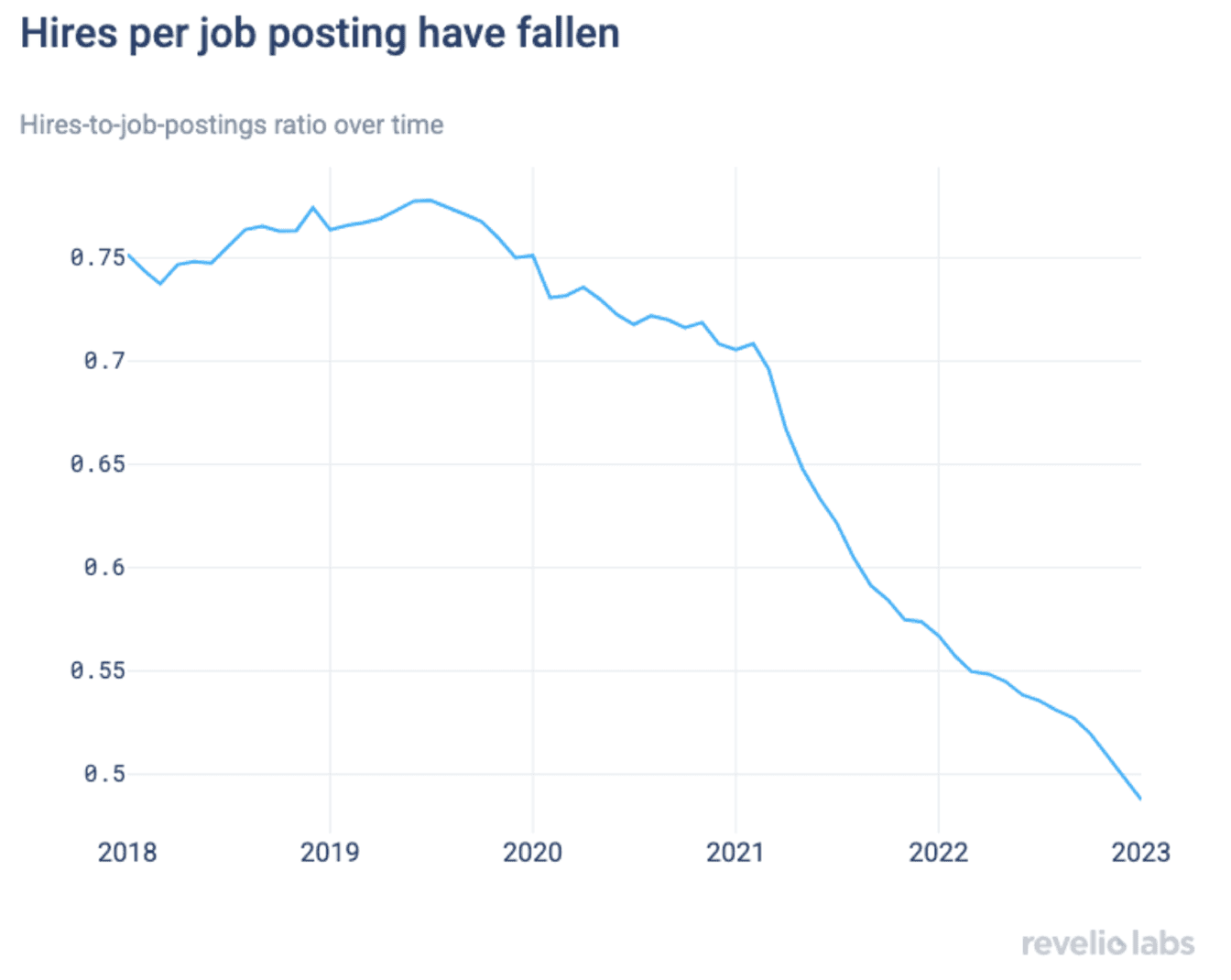
Data shows a dramatic drop in hires per posting
In 2023, workforce analytics platform Revelio Labs found that a job posting was only about half as likely to result in a new hire, compared to pre-pandemic. The ratio of people hired per job posting fell from around eight hires per 10 ads, to around four hires per 10 postings.
For many organizations, deceptive ghost jobs listings have become a habitual practice for a variety of reasons.
Over 21% of US recruiters surveyed by MyPerfectResume in August 2024 admitted that about half the jobs they post aren’t real
While 36% said around a quarter of their listings were ghost jobs. But some listings may unintentionally act as ghost jobs.
Legitimate listings can seem like ghost jobs purely through internal delays, oversights, or inexperienced recruiters and hiring managers. For instance, organizations might:

Often, ghost jobs are a kind of ‘productivity theater’ engaged in by organizations, designed to increase perceptions of dynamism and growth. Despite being misleading, this can have real world benefits — it sends positive signals to investors and financial markets.
After all, an actively recruiting company appears more successful. Many HR managers and senior leaders initiate ghost jobs simply to remain visible and give the impression of being open to external talent, even if they’re not.
Some ghost jobs are linked to talent management processes, where HR teams seek to:
Other stated reasons behind ghost job postings are highly unethical. In one survey, over 60% of respondents said the aim of ghost job postings was to give current employees the false idea that their workload would be eased, or to make employees feel replaceable.
That may be part of the reason that organizations that post ghost jobs also regularly follow through by conducting interviews with candidates.
It goes against best practice recruitment and talent management guidance, which generally promotes treating people with respect through a focus on transparent communication and inclusive practices that support equity, positive engagement, and work-life balance.
The number one red flag for ghost jobs is the age of the listing. A general rule of thumb is that it takes around 4-6 weeks to recruit a new employee, from the time an ad is posted to an offer of employment being accepted. If a listing has been online for months, the company would have received plenty of applications already — and, in most cases, should have been able to fill the position.
Seemingly perpetual hiring for the same, or very similar, roles at the same organization is another red flag for ghost jobs. Even if roles are sometimes being filled, it could point to a retention issue, which could point to a culture or management issue.
Ghost job ads often provide a lot of clues. Here’s what to look for:
When you’re interested in a role, do more research before applying and trust your gut if the role seems fishy. If the idea of wasting time on ghost jobs increases your job search anxiety, consider taking these steps to verify a job is real:

You may also come across fake jobs on popular jobs boards. Employment scams tap into people’s desperation and greed by creating fake job postings that sound ideal — with attractive rates of pay, promises of flexibility or remote autonomy, and easy, low-skilled work.
Indeed finds that scammers often post fake jobs with titles including:
The trouble is, they’re literally too good to be true, because the goal is to steal your money or sensitive data. The biggest red flags are jobs that seem to land in your lap with no effort, and anytime a prospective employer or business partner asks for payment to access an opportunity.
Warning signs of job scams (Beyond ghost jobs)
To avoid being scammed by fake jobs, be on the lookout for:
Some example fake jobs that have affected real people, which authorities like the FTC and FBI warn job seekers to be wary of include:
Fake check scam:
You’re hired and given an advance payment to cover home office equipment costs via check. But once it's deposited, your ‘employer’ asks you to repay some of the money due to overpayment. When the check ultimately bounces, you’re liable to the bank for the full amount, as well as being out of pocket what you paid back.
Reshipping schemes:
You’re ‘hired’ as a personal assistant, where the job is to receive deliveries at your home address and then repackage the products and reship them to a different address. The goods are often bought by scammers using stolen funds, and you never get paid.
Crypto platform scam:
You get a work-from-home gig that involves simple, click-based tasks performed via a web platform. Access requires creating an online account and depositing funds via cryptocurrency. You may be able to withdraw some earnings at first, but you’ll be asked to deposit larger amounts to access tasks, and eventually your account is frozen.
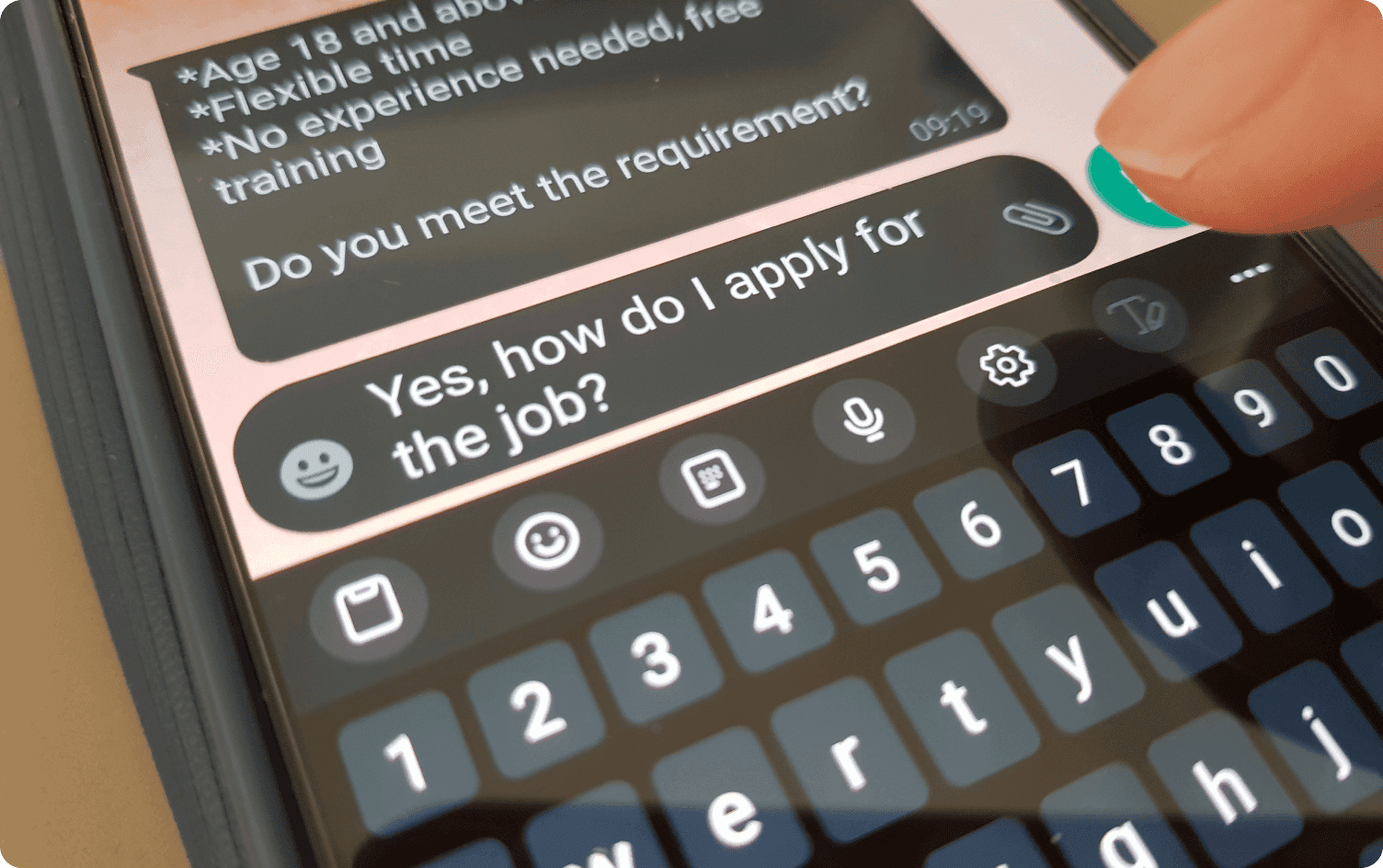
If you discover a fake job posting, the first step is to report it on the website you’re browsing. You can also alert state and national authorities, and other online forums, to increase public awareness and guide potential enforcement action.
Platforms like Indeed and LinkedIn make it easy to report a suspicious job directly from the job ad page. The platforms review ads that are flagged as possible scams, and they may be removed or edited. Indeed claims that it removes ‘tens of millions’ of postings from its platform every month due to violations of its guidelines.
Resource List: Where to report job scams
You may be wondering, do ghost and fake jobs distort official labor market data? The rate at which people are being hired, relative to the available jobs on the market, is measured through the Job Openings and Labor Turnover Survey (JOLTS). A Congressional Research Service (CRS) overview of the issue of ghost jobs published in April 2025 argued employers may be more likely to answer the JOLTS questionnaire honestly due to it being confidential.
If you compare the current unemployment rate, job openings and hires with just before the pandemic, today's numbers don’t reflect the typical relationship. You’d usually expect job postings to be higher when unemployment is lower, because employers are competing for a smaller pool of available talent.
August 2025
August 2019
Jobless rate
4.3%
3.7%
Job openings
7.23 million
7.18 million
Hires
5.1 million
5.9 million
Frustrated job seekers may feel like ghost jobs are a type of fraud, but there’s very little legal recourse at this stage. In February 2025, FTC Chair Andrew N. Ferguson formed a Joint Labor Task Force that will explore “deceptive job advertising,” which is described as posts that lure candidates with false promises regarding important employment terms like rates of pay or benefits.
At least three U.S. states have proposed laws to deal with ghost jobs by requiring greater transparency in job postings — such as having to remove postings within two weeks of filling a role — with fines for non-compliance. But none have yet to be passed into law.
If you’re hunting for work, you need to keep an eye open for both fake and ghost jobs. Protect yourself by using high-profile job search sites with clear policies designed to keep job seekers safe. Don’t rush into applying for an opportunity until you’re confident the organization and its offer is genuine, and keep records of your communication with prospective employers.
A Congressional Research Service (CRS) overview of the issue of ghost jobs published in April 2025 defined ghost jobs as “online job postings for positions that do not exist, or that employers are not planning to fill immediately.”
Between 20-30% of job postings have been identified as suspected ghost jobs in various studies conducted over different platforms. But there are no definitive indicators of how many of the jobs you'll encounter online aren’t real, so it’s important to know the signs of scams and ghost job postings.
The Federal Trade Commission is the main enforcement body when it comes to fake jobs. The FTC regularly takes scammers to court, including those advertising for sham job opportunities. Theoretically, ghost jobs have the potential to violate FTC’s consumer protection laws, but the Congressional Research Service (CRS) said enforcement efforts would “present legal challenges.”
Average time to hire varies across countries and industries, but a general rule of thumb is that it takes around 4-6 weeks to recruit a new employee. That includes the time required to screen and interview candidates, make an offer, and secure an acceptance from a preferred candidate. Which means job ads that are still active after 30 days may be more likely to be ghost jobs.
Modernize your hiring process with expert insights and advice.